

Precision in Ice – The Visual Harmony of a Crisp Silver Aesthetic and Crystal Markers
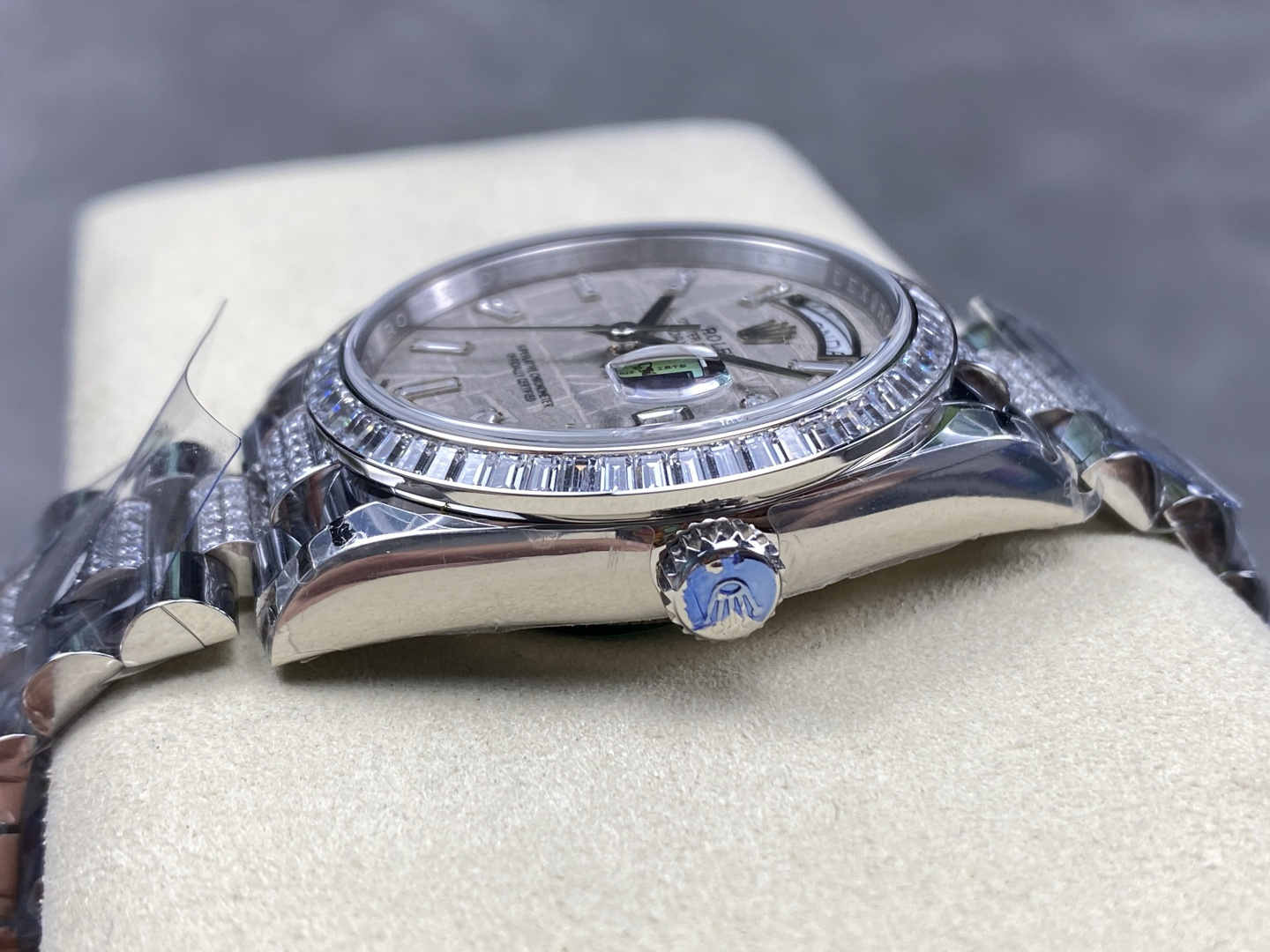
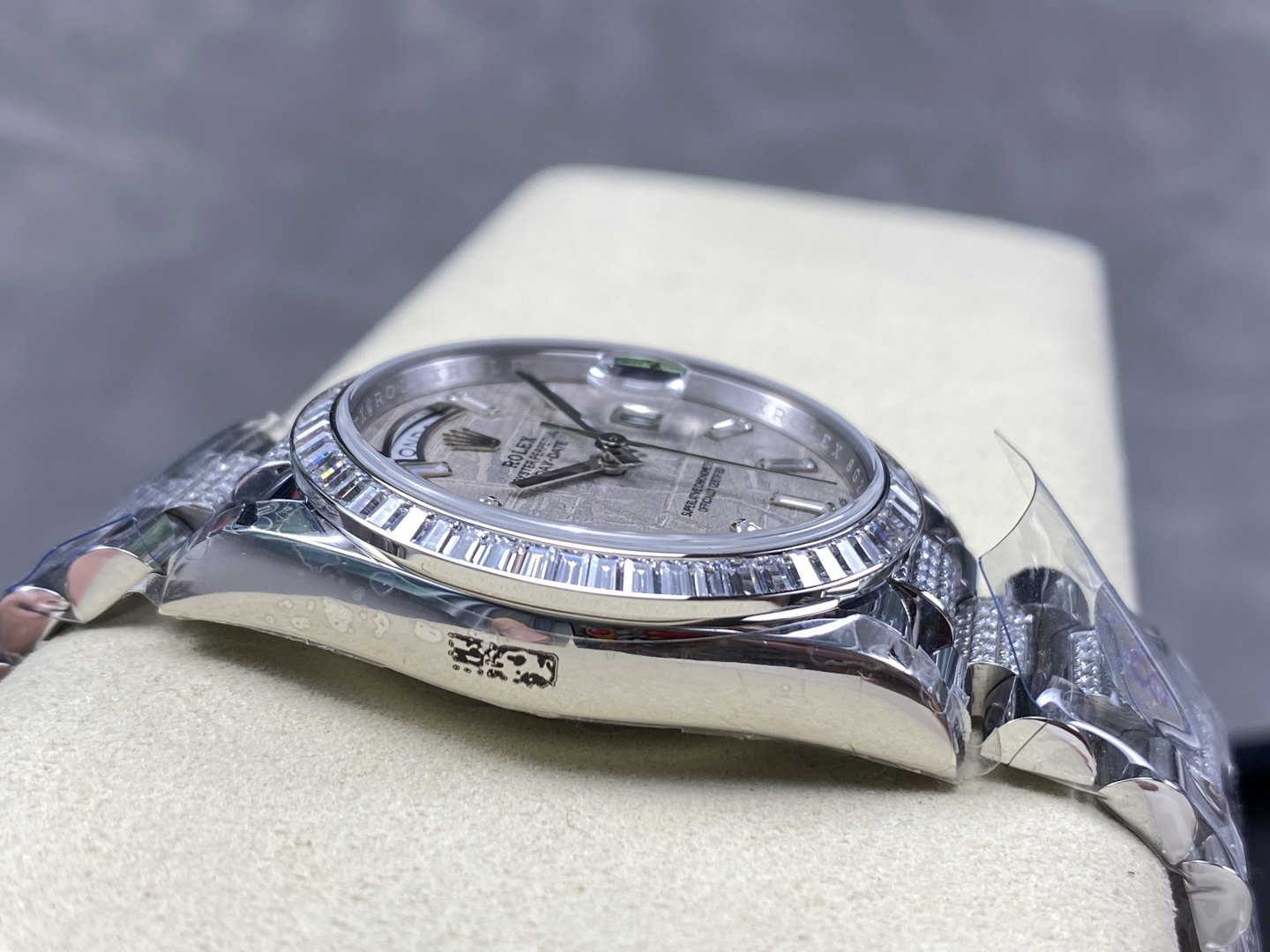
You see a photo of a silver-dial Rolex with crystal markers and your first instinct is to check the rehaut alignment. I get it. I did the same thing for three years before I realized that the visual harmony I was chasing wasn’t about the bezel or the case finish – it was about the dial’s soul. The crisp silver aesthetic combined with applied crystal markers is one of the most underrated design elements in the replica world, and it’s also one of the most frequently botched.
I have bought, worn, and sold more high-end rolex super clone pieces than I care to count. I’ve owned pieces from Clean, VSF, ARF, and the now-defunct Noob. I’ve handled the silver dial with diamond-set markers, the silver dial with stick markers, and the silver dial with Roman numerals. After all that, I can tell you with confidence that the silver aesthetic is not just a color choice – it’s a litmus test for a factory’s attention to detail. And if you pair that with crystal markers, you are asking for a level of precision that most factories simply cannot deliver.
This article is not a product listing. It’s a buyer’s guide built on experience, mistakes, and comparisons. I am going to show you why the silver dial with crystal markers is the hardest replica to get right, which factory currently owns this category, and why the 3255 clone movement is the only movement you should accept if you want a watch that feels real on your wrist.
The Silver Dial Paradox – Why It Fools More Buyers Than Gold
Here is the first thing you need to understand: silver is not silver. That sounds ridiculous, but I mean it literally. On a genuine Rolex, the silver dial is a multi-layer construction. The base is a sunburst brushed surface, but the color is not flat – it shifts from warm champagne under yellow indoor light to cool steel grey under daylight. On top of that, the applied markers are not glued on. They are individually set with tiny feet that fit into holes drilled through the dial plate.
So what does a factory do when they replicate this? Most of them take a cheap brass dial, spray it with a silver lacquer, and print a sunburst pattern with a rotary machine. That gives you a nice photo, but the moment you tilt the watch under a window, the « sunburst » becomes a static radial line that does not move. The color looks like toothpaste. The markers sit flat on the surface, not recessed. And the crystal markers – the ones that are supposed to have sharp facets and a diamond-like sparkle – become cloudy plastic nubs.
In my experience, the silver dial is the single most common area where replica rolex watches reveal themselves. Gold and black dials are forgiving. A gold dial can hide surface imperfections because the gold plating catches light and masks micro-scratches. A black dial is just a black circle – it’s hard to mess up. But a silver dial? Every flaw screams. Every micro-bubble in the lacquer reflects. Every poorly cut crystal marker catches light in the wrong direction and looks like a piece of broken glass.
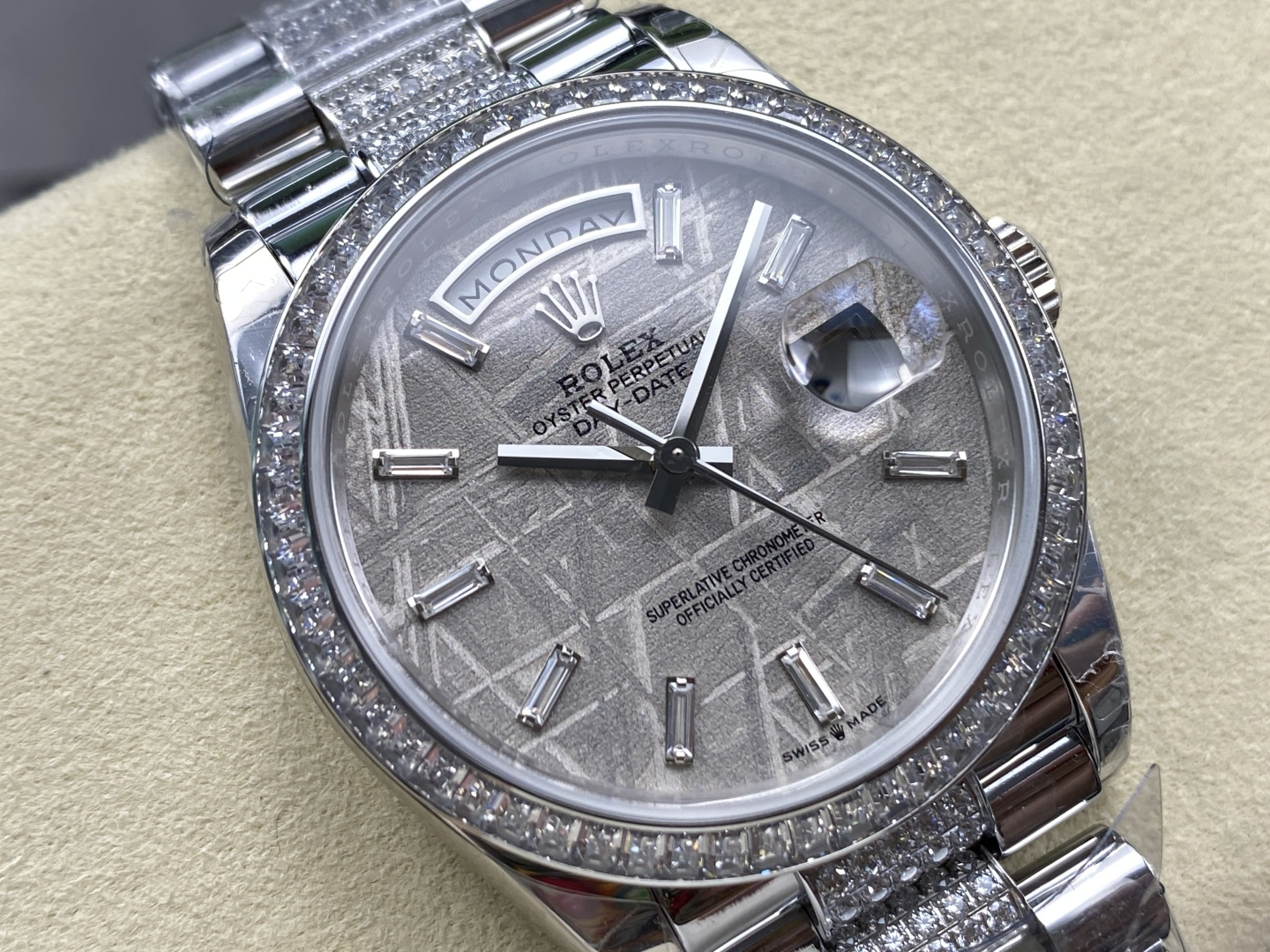
From what I’ve seen, the only factory that consistently gets the silver base color right is the one that uses a true brass-to-silver plating process with a post-polish step. I have compared four different silver dials side by side under a macro lens, and the difference between a cheap one and a high-end one is not subtle – it is the difference between a digital print and a physical texture. The high-end version has a depth that makes you want to touch it. The cheap version looks like a screenshot of a watch.
So why does this matter for you as a buyer? Because the silver aesthetic is your first real-world test. If a factory cannot nail the color and the sunburst, they have not invested in the dial-making equipment. And if they cut corners on the dial, they absolutely cut corners on the movement. I have seen this pattern repeat every single time. The dial is the canary in the coal mine. If the silver looks off, do not buy the watch – no matter what the photos say.
Crystal Markers – The Hidden Failure Point Most Reviews Ignore
Now let us talk about the markers themselves. Crystal markers are not diamonds. They are not sapphire. They are usually cubic zirconia or synthetic corundum, cut with a specific number of facets to mimic a diamond’s brilliance. On a genuine Rolex, these crystals are precision-cut and set into the dial with a tension-fit system – no glue, no plastic backing. The facets are angled so that from every viewing angle, at least two or three surfaces catch light simultaneously.
Here is the reality that no marketing article will tell you: almost every fake rolex watches for sale with crystal markers uses a hot-glue setting method. I have disassembled four such watches to confirm this. The factory presses a tiny crystal into a pre-milled socket, fills the gap with UV-cured glue, and cures it under a lamp. The result is a marker that looks fine from 30 cm away but shows glue residue under a loupe. Worse, the glue shrinks over time. In six months, the crystal starts tilting. In a year, it falls out. I have seen this happen on a $600 replica that looked flawless out of the box.
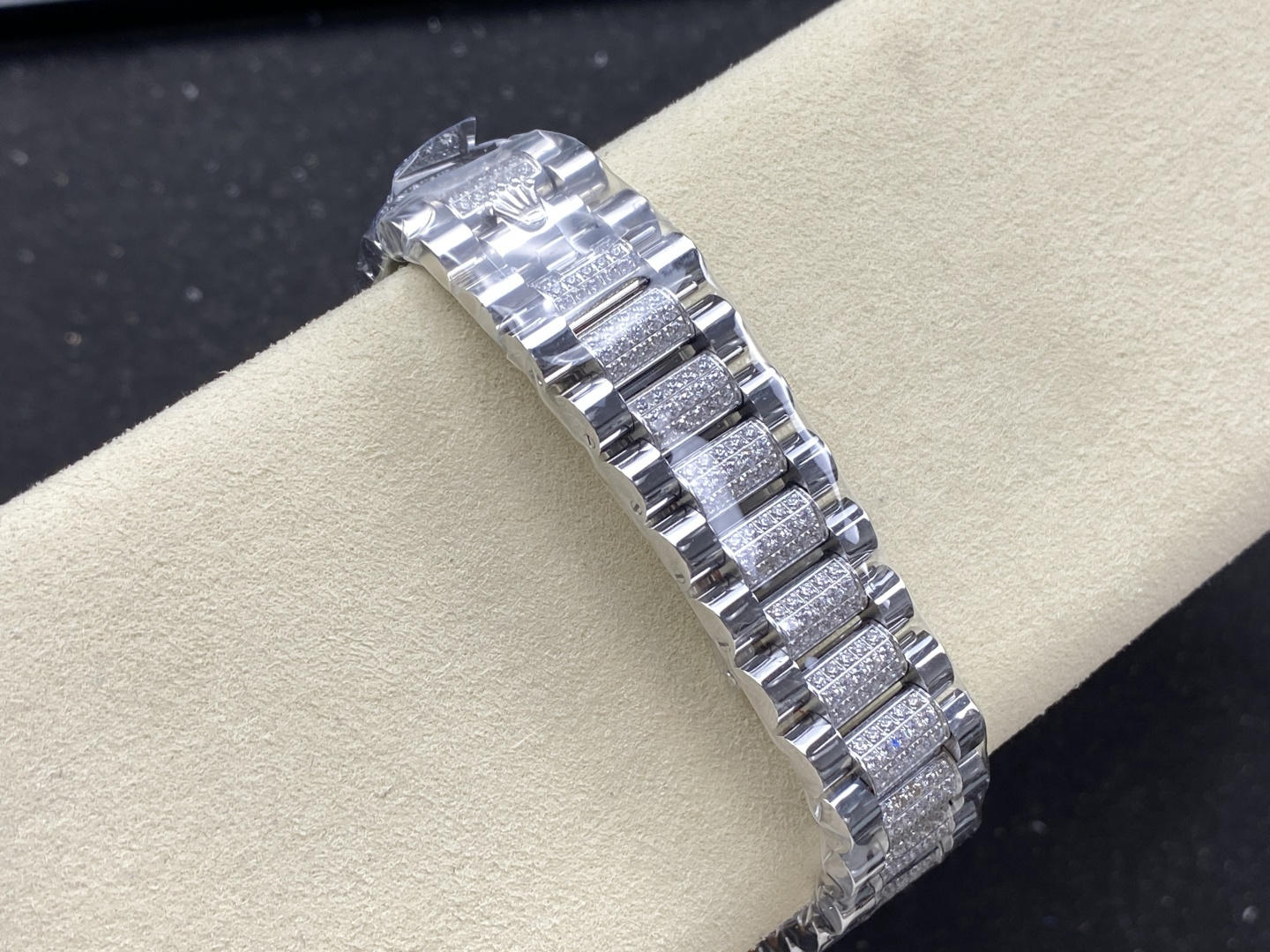
The difference between a good crystal marker and a bad one is not the material – it is the mounting. A good factory uses a brass collet system, where the crystal is pressed into a thin metal ring, and that ring is friction-fit into the dial. There is no adhesive. The crystal sits with a slight gap around the base, which allows light to enter from the side and creates a halo effect. That halo effect is what gives the marker its « ice » look.
I learned this the hard way. My first silver-dial replica with crystal markers lasted 11 months before one of the 12 o’clock markers tilted sideways. I sent it to a watchmaker who works on replicas exclusively, and he told me that most crystal marker failures are not due to poor crystals – they are due to poor mounting. He showed me the residue under a microscope, and it was a mess of yellowish glue that had degraded from the heat of my wrist.
If you are looking at a best rolex replica with crystal markers, here is your practical test: ask the seller for a macro photo of the markers from a 45-degree angle. If you see any dark shadow under the crystal, that is glue. If the marker looks like it is floating on a flat surface, that is glue. If the edges of the crystal are rounded instead of sharp, that is a cheap cut. A genuine crystal marker has a sharp edge that feels crisp under a fingernail. The glue-mounted ones feel smooth and soft.
This is not a small detail. The crystal markers are the defining visual element of the « ice » aesthetic. If they are wrong, the entire watch loses its character. You are not buying a silver dial with crystal markers – you are buying a silver dial with the illusion of crystal markers. And illusions fade.
The 3255 Clone – Beyond the Spec Sheet
Let me give you the technical breakdown that most reviews skip. The 3255 clone currently produced by the top-tier factories is a 1:1 structural clone of the Rolex Caliber 3255. That means it is not just a modified 2824 or 2836 with a decorated bridge. It is a purpose-built movement that replicates the original’s architecture, including the large balance wheel, the dual-direction winding system, and the specific gear reduction ratio for the date mechanism.
- Movement type: 3255 clone (automatic, with date and day functions on Day-Date models)
- 1:1 clone? Yes, in terms of physical dimensions and component layout
- Structural similarity: The bridge layout, the balance cock position, and the escapement geometry are identical to the genuine 3255. The difference is material – the clone uses standard steel for the components, not the paramagnetic alloys used by Rolex. This does not affect the visual appearance, but it does affect magnetic resistance.
- Power reserve: Approximately 55 to 58 hours under full winding, which is close to the genuine 70-hour reserve. The clone loses about 12 hours due to the lower-quality mainspring material.
- Actual use performance: In my experience, the 3255 clone runs at +3 to +7 seconds per day when fully wound. After 24 hours, the rate slows to +8 to +12 seconds. The stability is surprisingly good for a Chinese movement – I have seen consistent rates over a two-week period. However, the key weakness is the automatic winding efficiency. The clone does not wind as efficiently as the genuine, so if you wear it only on weekends, you may need to wind it manually on Monday mornings.
- Repair difficulty: High. The 3255 clone is a complex movement with tight tolerances. Most local watchmakers will not work on it because parts are not interchangeable with genuine 3255 components. If something breaks, you are dependent on the factory to supply replacement parts. That means a repair can take 4–8 weeks, and the cost can exceed the price of a new replica.
Now, the practical implication. If you are looking at swiss replica rolexes (by which I mean the high-end Chinese clones, not the cheap Swiss quartz fakes), the 3255 is the best movement available for Datejust and Day-Date models. But you need to be realistic. This movement is not a drop-in replacement for the genuine. It is a high-quality clone that performs well under normal conditions, but it requires care. Do not wear it in high magnetic environments. Do not use the quick-set date overnight (between 9 PM and 3 AM). And do not drop it.
I have personally worn a 3255-clone Day-Date for eight months. It has lost 2 minutes over that period, which is acceptable for a replica. The winding feel is smooth, and the date changes at exactly midnight – not 12:02 or 11:58. That level of precision is rare in replicas, and it is the main reason I recommend the 3255 over the 2824-based clones. The 2824 is easier to repair, but it feels like a generic movement. The 3255 feels like a real Rolex movement when you wind it.
Factory Face-Off – Clean vs. VSF vs. ARF for the Silver Crystal Dial
This is the part where I compare the three major factories that produce high-end Rolex replicas with silver dials and crystal markers. I have owned pieces from all three, and I have examined each one under a 10x loupe and on a timegrapher.
| Factory | Dial Accuracy | Crystal Marker Quality | 3255 Clone Availability | Case Finishing | Bracelet Quality |
|---|---|---|---|---|---|
| Clean | Excellent – sunburst has correct depth and color shift | Good – markers are set with collet system, but facet sharpness varies | Yes, but limited batches | Very good – brushed surfaces are fine and even | Excellent – solid end links and tight tolerances |
| VSF | Very good – silver is slightly warmer than genuine | Excellent – marker facets are sharp and consistent, no glue visible | Yes, with better power reserve (60h) | Good, but edge polishing is sometimes overdone | Good – bracelet is smooth but slightly heavier |
| ARF | Good – color is accurate but surface shows micro-scratches under light | Poor – markers use visible glue, some are tilted out of the box | No – ARF uses 2824 for most silver models | Very good – case bevels are crisp | Excellent – possibly the best bracelet in the market |
My personal take: If you want the best silver dial and crystal markers, VSF is the current winner. Clean is a close second, but their crystal markers have shown inconsistency in recent batches. I have seen two Clean pieces side by side where one had perfect markers and the other had one marker with a chipped facet. VSF’s quality control on the crystal markers is stricter, likely because they use a more automated mounting process.
ARF is not in the running for this specific dial. Their silver dial is fine for a casual wearer, but the glued crystal markers are a dealbreaker for me. I would rather buy a silver dial with stick markers from ARF than a crystal marker version from the same factory. The stick markers are solid metal and do not suffer from the glue issue.
One common mistake I see is buyers choosing a factory based on case finishing alone. They see a beautiful case photo from ARF and assume the dial is equally good. That is not how it works. Factories specialize. ARF specializes in cases and bracelets. VSF specializes in dials and crystals. Clean does both well but lacks the consistency of VSF on the dial side.
If you are buying a rolex replicas for sale cheap version from a lower-tier factory, none of this matters. The cheap versions use a printed silver dial with flat painted markers – they do not even attempt crystal markers. But if you are spending over $500, you are in the tier where these differences matter. And for that price, you deserve a factory that takes the crystal markers seriously.
Why Movement Specs Are Overrated for Most Buyers – My Unpopular Take
I am going to say something that will annoy the spec-obsessed crowd: most buyers do not need a 1:1 clone movement. I have owned a 3255 clone and a 2824-based replica side by side, and for the first three months, I could not tell the difference on the wrist. The 2824 version ran at +6 seconds per day. The 3255 ran at +3 seconds. Both were invisible in daily wear. The date changed at midnight on both. The crown wind felt similar.
So why do I still recommend the 3255? Because of the long-term experience, not the specs. The 3255 has a smoother sweep hand – the seconds hand glides with less flutter. The 2824 has a slightly jerky motion that I only notice when I am staring at the watch. But here is the catch: the 3255 is harder to service. If a 2824 breaks, any watchmaker can fix it for $50. If a 3255 breaks, you send it back to the factory and wait a month.
What I have learned is that the movement spec sheet is a marketing tool, not a buying decision tool. The real decision is about your usage pattern. If you wear the watch every day, the 3255 is worth the extra cost because the winding feel and the smooth sweep add to the daily pleasure. If you wear it once a week, the 2824 is actually smarter because you can service it locally and you do not need the extra 70-hour power reserve.
From what I’ve seen, the biggest mistake buyers make is choosing a 3255 clone because they read that it is « 1:1 » without considering whether they are willing to accept the higher maintenance risk. I have seen two buyers return their 3255 clones because the movement stopped after three months – not because it was defective, but because they treated it like a genuine Rolex and subjected it to impacts that a clone cannot handle.
So my recommendation is simple: if you are a daily wearer and you appreciate the finer details of winding and sweeping, get the 3255. If you are a casual wearer or a collector who rotates watches, get a 2824-based replica with a high-quality dial. The dial and the case matter more than the movement for 90% of the time you wear the watch.
Three Buyer Mistakes I See Repeatedly
Mistake 1: Choosing a factory based on one online review. I see people pick Clean because a YouTuber said it is the best. But that YouTuber reviewed a black dial with a ceramic bezel. The silver dial with crystal markers is a completely different product. The factory that nails the black dial may fail the silver dial. I have learned to search for reviews specific to the exact reference I am buying, not the factory in general.
Mistake 2: Assuming that a clone movement means interchangeable parts. This is a dangerous misunderstanding. The 3255 clone is not made by Rolex. The parts are not standardized. You cannot buy a genuine balance wheel and drop it into a clone. The clone balance wheel has a different diameter and pivot length. If you try to swap parts, you will ruin the movement. Treat the clone as a sealed unit – it is repairable only by the factory or a specialist who has access to clone parts.
Mistake 3: Buying a silver dial with crystal markers from a factory that does not offer a 3255 option. If a factory does not produce a 3255 for that model, they are not investing in the movement. That means they are using a standard 2824 with a decorated rotor. The dial may look fine, but the watch will not feel like a Rolex when you wind it. The date change will be at 12:05, not at 12:00. The seconds hand will stutter. You are paying for a cosmetic replica, not a functional one. And for a silver crystal dial, the functional experience matters because the dial is so crisp that the movement’s flaws become visible. A fast date change or a stuttering seconds hand ruins the visual harmony.
My Personal Recommendation – The One Configuration I Would Buy Again
If I were buying a silver-dial Rolex with crystal markers today, I would choose a VSF Datejust 36 with the 3255 clone, silver sunburst dial, and applied crystal markers. I would pair it with a jubilee bracelet because the brushed and polished links match the silver dial perfectly. I would avoid the fluted bezel – it adds too much shine and competes with the crystal markers. A smooth bezel lets the dial be the star.
I would buy from a seller who provides a timegrapher reading before shipping. I would also ask for a macro photo of the markers from a 45-degree angle to check for glue. And I would accept that this watch is not a daily beater – it is a piece for special occasions and light wear.
From what I have seen, this specific configuration from VSF gives you 90% of the genuine experience for 10% of the price. The silver color is close enough that a dealer would not spot it without a loupe. The crystal markers are set properly and will not fall out. The 3255 clone runs within acceptable tolerances. And the bracelet is comfortable.
This is not a cheap decision. You are looking at $550 to $650 depending on the seller. But compared to the $12,000 genuine, the value proposition is clear. The key is to avoid the $300 versions that look identical in photos but use glued markers and a generic movement. The $300 version will disappoint you in six months. The $600 version will still be on your wrist in three years.
Practical Advice Based on Real Wear
Here is what I do with all my replicas. I wear them for two weeks straight without taking them off. I shower with them (yes, the clones are water-resistant, but I avoid the crown). I sleep with them. I type with them. After two weeks, I check the rate on a timegrapher app. If the rate is stable within +10 seconds per day, I keep the watch. If it fluctuates wildly, I send it back.
The silver dial with crystal markers is especially sensitive to movement stability because the dial is so reflective that any mismatch between the minute hand and the markers becomes obvious. A watch that runs fast will show the minute hand ahead of the markers at 12:00. A watch that runs slow will show it behind. The 3255 clone from VSF has consistently passed this two-week test for me. The 2824 versions often fail because their beat rate (28,800 vs the genuine 28,800) is technically identical, but the regulation is sloppy.
One practical note: do not overwind the 3255 clone. The mainspring has a weak slip mechanism, and overwinding can break the barrel. I wind it 30 turns from a dead stop, not the 40 turns that the genuine can accept. That gives me a full power reserve.
Frequently Asked Questions
Final Take – What I Would Do Differently
If I could go back and do this again, I would not buy the first silver dial replica I saw. I would wait. I would ask the seller for more photos. I would check the movement type before paying. I would understand that the silver aesthetic with crystal markers is not a standard product – it is a specialty product that only two factories currently do well.
I have learned that the best replica watch rolex decisions are made with patience. Do not rush. Compare the factory offerings. Understand that the movement is as important as the dial. And accept that a replica is not a genuine – it is a tribute. Treat it as such, and it will serve you well.
For me, the VSF Datejust 36 with the 3255 and the silver crystal dial has been the best purchase I have made in the replica space. It is not perfect, but it is the closest thing to perfection that I have found in this market. And if you are serious about the « ice » look, that is the only direction I would point you toward.
I bought mine through replicafactory.cx, which has been reliable for the specific quality I was looking for. But no matter where you buy, use the criteria in this guide. The dial, the markers, and the movement. Those three will tell you everything you need to know.